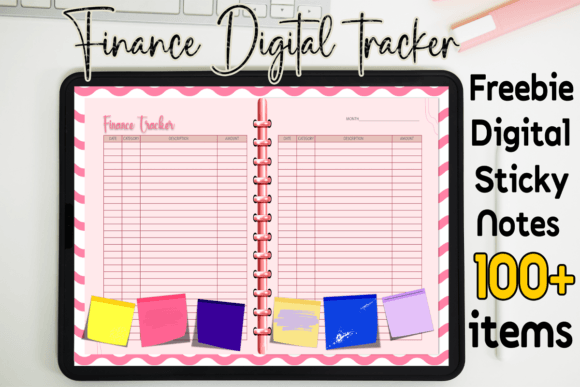
Finance Tracker: A Designer's Digital Toolkit
Imagine transforming the often-tedious task of financial management into a visually engaging and creatively satisfying process. A well-designed Finance Tracker, particularly one offered as a multi-page digital PDF file, does exactly that, blending utility with aesthetic appeal for users of apps like GoodNotes, Notability, and Xodo. For graphic designers and creative professionals, this type of digital product represents more than just a functional tool; it's an opportunity to apply principles of visual hierarchy, branding, and modern aesthetics to personal productivity, creating a seamless extension of one's professional design workflow.
Beyond Numbers: The Visual Communication of Finance
Effective financial tracking is fundamentally about clear communication—presenting complex data in an understandable, actionable format. From a graphic design perspective, a Finance Tracker PDF is an exercise in information design. The layout, typography, and color palette must work in concert to guide the user's eye, prioritize key figures, and reduce cognitive load. A cluttered tracker fails, while a thoughtfully designed one enhances comprehension and encourages consistent use. This mirrors the core challenges of editorial design and UI/UX design, where the user's experience is paramount.
Practical Applications for the Modern Creative
The utility of a digital Finance Tracker extends far beyond simple expense logging. It serves as a cornerstone for organized financial management within various creative and business contexts.
- Brand Identity for Solopreneurs: Consistent use of a tracker designed with your brand's color palette and typography reinforces your professional identity, even in administrative tasks.
- Project-Based Financial Management: Freelancers and agencies can track project-specific expenses, client invoices, and profitability with clarity, aiding in more accurate future project scoping and billing.
- Marketing Campaign Budgeting: Visually allocate and monitor budgets for social media graphics, advertising campaigns, and other marketing materials, ensuring resources are spent effectively.
- Personal Branding & Lifestyle Content: For influencers and content creators, a beautifully designed tracker can become part of their visual narrative, sharing productivity tips with a cohesive aesthetic.
Designing for Function: Key Considerations
When evaluating or creating a Finance Tracker as a digital product, several design elements are critical for success. The goal is to achieve a professional presentation that feels both premium and immensely practical.
- Visual Hierarchy & Readability: Clear headings, consistent spacing, and legible typography are non-negotiable. Users must be able to scan and find information quickly without strain.
- Color with Purpose: Use a limited, cohesive color palette. Color should categorize (e.g., green for income, red for expenses) and highlight, not decorate. Ensure sufficient contrast for accessibility.
- Scalability & Compatibility: The PDF must be optimized for various tablet screens, from iPad to Android, ensuring interactive elements (like checkboxes or fillable fields) function flawlessly across different note-taking apps.
- Modularity and Flexibility: The best trackers offer customizable templates—monthly, weekly, project-based—allowing users to adapt the system to their unique financial workflow and creative projects.
Ultimately, a Finance Tracker is a powerful example of how thoughtful design solves real-world problems. By applying a graphic designer's eye for composition, typography, and user experience to a utilitarian document, you create more than a spreadsheet alternative. You build a system that respects the user's time, aligns with their professional identity, and makes the mundane act of tracking finances a visually coherent and even inspiring part of their daily routine. This fusion of form and function is the hallmark of quality creative assets that genuinely improve both aesthetics and communication.